Introduction
Cardiopulmonary resuscitation, or mouth-to-mouth resuscitation, is a life-saving method that's important in emergencies when somebody's heart has stopped defeating or they've stopped breathing. In such alarming scenarios, knowing exactly how to execute CPR properly can make the distinction between life and death. One crucial aspect of delivering effective mouth-to-mouth resuscitation is understanding the value of taking turns on compressions This write-up will dig deep into the art of efficient CPR, checking out topics from basic vs innovative life support to public defibrillator usage.
Taking Turns on Compressions: The Art of Reliable CPR
When it concerns providing mouth-to-mouth resuscitation, taking turns on compressions is vital for keeping premium breast compressions. It helps avoid exhaustion amongst rescuers and guarantees that the casualty obtains regular and effective compressions. The suggested price for breast compressions is in between 100 to 120 per min, with a deepness of at least 2 inches for adults. Rescuers ought to change every two mins or quicker if they feel fatigued.
Understanding Basic vs Advanced Life Support
Before diving right into the specifics of mouth-to-mouth resuscitation techniques, it's vital to differentiate in between basic and innovative life assistance (BLS vs ALS).
Basic Life Assistance (BLS)
BLS typically entails non-invasive procedures executed by nonprofessionals or very first responders trained in mouth-to-mouth resuscitation. It focuses on:
- Checking Responsiveness: Assessing whether the individual is conscious. Identifying No Breathing: Observing if the person is not breathing or breathing abnormally. Administering Chest Compressions: Performing high-quality breast compressions and rescue breaths if trained.
Advanced Life Assistance (ALS)
ALS incorporates a lot more advanced clinical interventions normally carried out by healthcare professionals, such as paramedics or physicians. It includes:
- Use of advanced respiratory tract monitoring techniques Administration of medications Monitoring vital signs
Both BLS and ALS are essential components of emergency situation reaction systems yet serve different duties within client care.
The Significance of Checking Responsiveness
In emergency circumstances, quick decision-making can be lifesaving. Checking responsiveness need to constantly be the first step:
Shout and Shake: Gently shake the casualty and shout loudly if they respond. Assess Feedback: If there's no feedback, proceed to look for breathing.Being able to recognize responsiveness can identify whether https://jsbin.com/filudexuwe prompt action is necessary.
Identifying No Breathing
Identifying no breathing is crucial in validating cardiac arrest. After inspecting responsiveness:
- Look for breast rise. Listen for breath sounds. Feel for air versus your cheek.
If there's no normal breath within 10 seconds, call for help immediately and begin breast compressions.
Maintaining Calmness During CPR
Administering mouth-to-mouth resuscitation can be stressful; hence preserving calmness is necessary:
- Focus on your job handy; your activities might conserve a life. Take deep breaths before beginning if you really feel anxious.
Remember, panic can cause errors-- clear reasoning brings about better outcomes.

Public Defibrillator Use: A Lifesaver
Another vital element in heart attack situations is making use of Automated External Defibrillators (AEDs):
Locate an AED: Many public areas currently have AEDs accessible. Follow Directions: AEDs give voice motivates; follow them carefully. Attach Pads Correctly: Guarantee pads are positioned appropriately on bare skin-- one pad on the upper right chest and one on the lower left side.Using an AED enhances survival chances considerably when made use of immediately along with CPR.
The Function of BLS Qualification in Efficient CPR
Obtaining a BLS certification outfits people with crucial abilities:
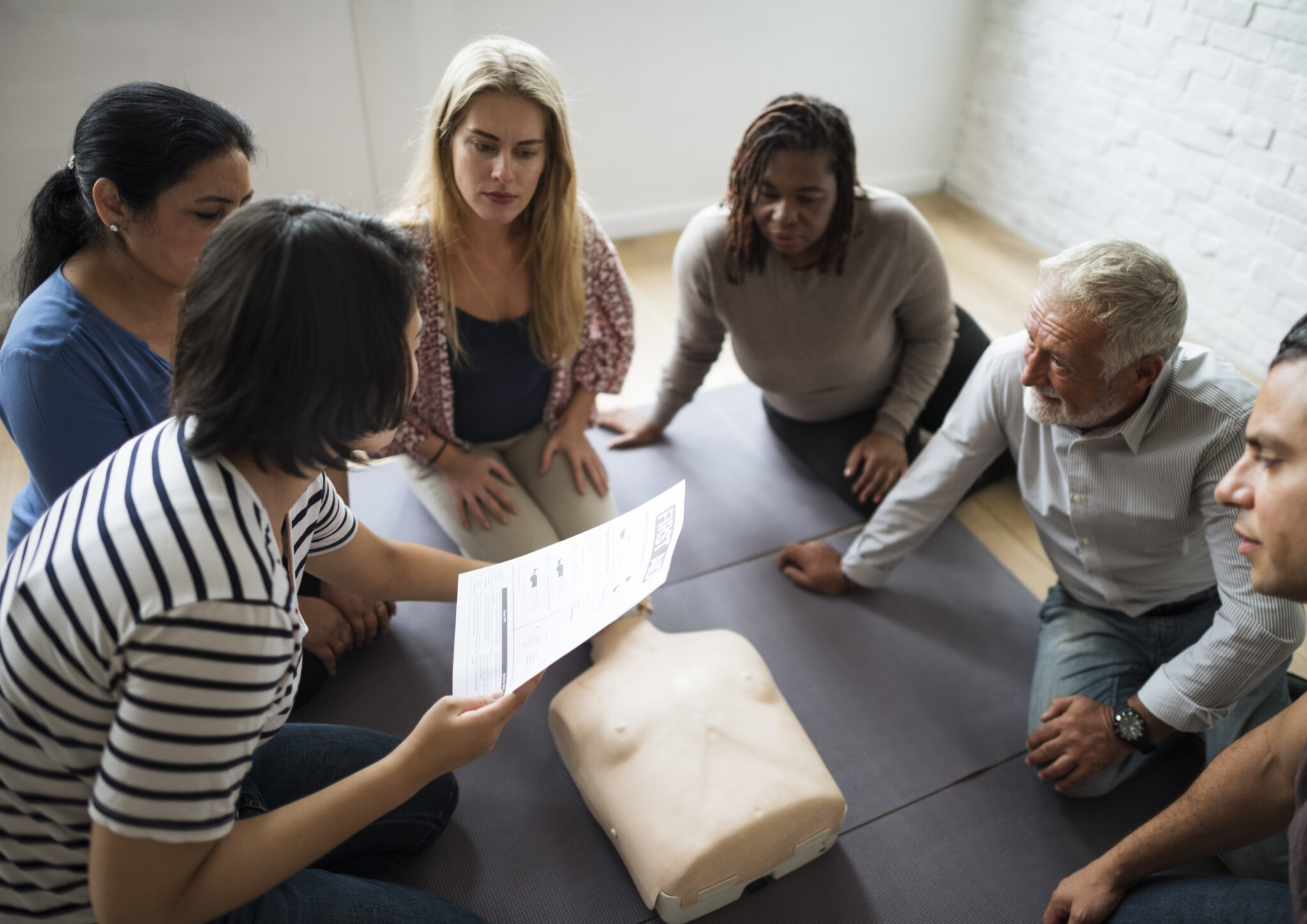
- Understanding how to check responsiveness Identifying no breathing Administering effective upper body compressions
Courses frequently cover both grown-up and pediatric circumstances, making it invaluable for caretakers, educators, and work environment safety and security teams.
The Technicians Behind Taking Turns on Compressions
Taking turns on compressions entails systematic coordination amongst rescuers:
Timing Your Switch: Objective to change every 2 minutes or after 5 cycles of 30 compressions and 2 breaths. Communicate Clearly: Usage expressions like "Switch!" so everyone recognizes when to shift without missing out on a beat. Stay Efficient: Keep transitions smooth-- do not let hands leave the upper body throughout switches.This technique avoids exhaustion and maintains top notch compression requirements required for effective resuscitation efforts.
Lower Compression Depth: Why It Matters
Maintaining appropriate compression depth is crucial in making sure blood flow throughout heart attack:
Adult Depth: A minimum of 2 inches (5 centimeters) Child Depth: About 1/3 the deepness of their chest Infant Deepness: Around 1 1/2 inches (4 cm)Lower compression midsts fail to produce sufficient blood flow-- ensuring proper deepness straight correlates with survival rates.
Slow Compression Price-- A Misconception?
Some may think that decreasing compressions enhances efficiency; however:
- Studies show that maintaining a quick pace in between 100 -120 per min yields better outcomes.
If you're unfamiliar with First Aid Courses Sunshine Coast this rate, take into consideration using songs like "Surviving" as an acoustic guide!
FAQs Concerning Efficient mouth-to-mouth resuscitation Techniques
Q1: What need to I do first when I witness somebody collapse?
A1: Check responsiveness by heckling them and shaking them gently; if less competent, call emergency services immediately.
Q2: How often need to I take turns carrying out compressions?
A2: Preferably change every 2 minutes or quicker if you feel tired out; clear communication makes sure smooth transitions.
Q3: Can any individual execute CPR?
A3: Yes! Any person trained in basic life support can provide mouth-to-mouth resuscitation effectively till professional assistance arrives.
Q4: What function does an AED play in heart emergencies?
A4: An AED analyzes heart rhythm and gives shocks if needed-- when integrated with mouth-to-mouth resuscitation, it significantly raises survival chances!
Q5: Do I need unique training to use an AED?
A5: No! A lot of AEDs are created for convenience of use with visual/audio triggers assisting you through each action-- training boosts self-confidence however isn't mandatory!

Q6: How much time must I proceed CPR?
A6: Continue until medical professionals show up or until you are also worn down to continue safely-- every second counts!
Conclusion
Mastering the art of reliable cardiopulmonary resuscitation requires technique, understanding about standard vs sophisticated life support principles, recognizing just how to examine responsiveness, identifying no breathing circumstances promptly, preserving composure throughout demanding scenarios, using public defibrillator usage when offered-- this thorough understanding culminates in effective intervention strategies throughout emergency situations.
By concentrating on essential aspects like taking turns on compressions while ensuring adherence to medical facility codes and methods-- even throughout minutes filled with stress and anxiety-- a strong structure constructs self-confidence that converts into improved target end results!
So outfit on your own with BLS certification today due to the fact that your preparedness might simply save someone's life tomorrow!